Quality
Quality Control
What we check, how often, and what evidence you get with the shipment.
Material and process
Most quality pages list what gets measured. Measuring catches the tube that is out of size. It does not catch the tube that is the right size and fails six months later. These are the steps we take so that does not happen.
Every acrylic tube is annealed before it ships
Extrusion leaves stress frozen into the wall. You cannot see it in the box — it shows up later, as crazing round a drilled hole, a crack after solvent bonding, or a web of hairlines weeks after the part went together. We heat and slow-cool every acrylic tube to relieve that stress before it leaves the factory. It costs us a process step that a lot of extruders skip, and it is the reason our tube machines, bonds and cleans without going milky.
UV stabiliser and anti-ageing additive as standard
We run a UV stabiliser and an anti-ageing additive in our acrylic on every job, not as a priced option you have to know to ask for. PMMA is already the most weather-stable of the clear plastics; the additive package is what keeps it from yellowing at the edges over an outdoor service life.
Round tube qualified for kerosene and petrol contact
Our extruded round tube has been tested holding kerosene and petrol — the most aggressive media we have qualified it against. This follows directly from the annealing: stressed acrylic crazes on contact with fuel, annealed acrylic does not. If you are building fuel-level sight tubes, dispenser gauges, generator or lamp reservoirs, tell us the medium and we will confirm it against what we have actually tested rather than guessing from a chemical chart.
Certifications
| ISO 9001:2015 | Whole factory · issued by Beijing TRT Certification Certificate no. 04823Q40593R5M |
|---|
Our current certificate runs to 27 September 2026. Renewal is in progress and we will publish the new certificate number here as soon as it is issued — if you need to see the certificate before then, ask and we will send the current one with its renewal status.
Material declarations
RoHS and REACH declarations come from the resin manufacturers whose grades we run — Mitsubishi, Evonik, Wanhua, Teijin, LG and Chi Mei. We pass the current declaration for your grade through with your order. We do not hold RoHS or REACH certification in our own name, and we would rather tell you that than let you find out during an audit.
Typical material properties
Published properties of the PMMA we extrude, from the resin makers' own technical data sheets. These are material figures, not our finished tube — tolerance and finish on the extrusion are confirmed per section before you order.
| Property | Typical value |
|---|---|
| Light transmittance (ISO 13468, 3 mm) | 92 % |
| Haze (ISO 14782, 3 mm) | < 0.5 % |
| Refractive index | 1.49 |
| Tensile strength / modulus (ISO 527) | 77 MPa / 3300 MPa |
| Flexural strength / modulus (ISO 178) | 135 MPa / 3300 MPa |
| Vicat softening point (ISO 306, B50) | 107 °C |
| Heat distortion temperature (ISO 75, 1.8 MPa) | 102 °C |
| Density (ISO 1183) | 1.19 g/cm³ |
| Flame rating (UL94, 1.5 / 3.0 mm) | HB |
We hold the resin makers' test documentation for the grades we run — material declarations, UL listings and weathering data among them — and we pass what is relevant through with your order. Tell us at enquiry stage which documents your customer or your auditor will ask for, and we will tell you before you order whether we can supply it, rather than after.
- RoHS declarations for the resin grades we run
- REACH declarations for the resin grades we run
The sampling plan
We inspect to ISO 2859-1 — normal single sampling — adopted in China as GB/T 2828.1. These are the levels we actually run, so you can check them against your own incoming plan before you order:
| Extruded product, entry to stock | Special level S-3, AQL 4.0 |
|---|---|
| Marking and labelling | AQL 0.15 |
| Machined and fabricated product | Special level III |
| Any batch re-submitted after a failure | AQL 2.5, and the inspection level steps up one grade for every re-submission — until the batch is inspected 100 % |
That last row is the one worth reading twice. When a batch fails here, the next inspection of it is stricter, not easier. A supplier who re-checks a rejected batch at the same level as the first time is not really re-checking it.
When a batch gets inspected
| When | Who | What happens |
|---|---|---|
| After every setup | Shift leader or the setter | First-article inspection. Nothing runs in volume until the first piece is measured and passes. |
| At every shift handover | Incoming shift leader | First-article inspection again. The incoming shift does not inherit the outgoing shift’s result. |
| After any adjustment | Whoever adjusted the line | First-article inspection again, whenever the process is touched or output looks unstable. |
| Every 2 hours | Production crew | Self-check against the running standard, recorded. |
| Every 2 hours | Line leader | Patrol inspection. Each two-hour window is treated as its own batch, sampled to plan — so a problem can only ever contaminate two hours of output, not a shift. |
| Before stock | QC department | Final inspection to the sampling plan, with the weight of at least one piece checked per batch. Bundled product is unwrapped — up to two bundles fully, at least three when the batch runs larger. |
| After the annealing oven | QC department | Clear acrylic is re-checked for out-of-roundness, residual stress and oil mist after annealing. It does not enter stock until that check passes. |
| Before shipment | QC department | Outgoing inspection after packing, against the order. |
The two-hour patrol is the part that does the real work. Because each two-hour window is closed out as its own batch, a drift that starts after lunch is caught in that window — it cannot quietly run into the evening and turn into a container.
What we measure it with
- Profile projector
- Vernier callipers — one per operator, not shared from a tool crib
- Micrometers
- Steel tape for length
- Colorimeter for colour matching
- Integrating sphere for light transmittance and haze
- Accelerated weathering tester
- Melt flow indexer for incoming resin
Two of those are worth pointing at. The integrating sphere means we can give you a measured transmittance and haze figure rather than the resin maker's datasheet number. The melt flow indexer means incoming resin is checked before it reaches a die, not after a batch has gone wrong.
- Sampling inspection through the run
- Measuring and inspection equipment on site
- First-article sample for your approval
- Inspection report with the shipment
- Straightness control on long lengths
The rule behind the rules
Our written standard says that a part which meets the standard but still has a defect clearly affecting its appearance or its use is to be judged non-conforming. We put that sentence in deliberately. A specification cannot anticipate everything, and an inspector who is only allowed to read the table will pass parts that everyone can see are wrong.
Where a product has its own agreed standard, that standard governs; our general standard applies only where it is silent. Standards are reviewed every two years and tightened as the process improves — and a change needs Technical, Production and QC to agree it and the General Manager to approve it, so no single department can quietly relax a limit.
Fine surface scratching is not judged by eye under the shop lights. The piece is stood on a 170 mm LED disc lamp of 120 diodes, the supply set to 7.9 V ± 0.05, and viewed down the surface from 500 mm at an angle. Same lamp, same voltage, same distance, every time — so two inspectors on different days reach the same answer, and so can you.
When something fails
The batch is physically separated and tagged before anything else happens — our shop floor runs on status tags, so a batch is always visibly awaiting inspection, passed, isolated or concession. Nothing sits untagged.
From there it is sorted, reworked, scrapped, or released on concession — and a concession is not an inspector's call. It needs the General Manager or sales, against a confirmed understanding of what the customer actually needs the part to do. Whatever the route, the batch is re-inspected before it moves, at the tightened level above, with the re-submission counted on the record.
From your order to your shipment
This is the sequence every order runs through. It exists in this shape because of the shipment we got wrong years ago — the standard now gets written and agreed before production, not inferred from the enquiry.
- Order accepted
- Technical review
- Small-batch trial
- Written standard agreed
- First-article inspection
- In-process inspection
- Final inspection
- Sampling inspection
- Post-packing inspection before shipment
Every step produces inspection data and a record, and a non-conformance at any step needs the General Manager's or sales' signature to go any further. Records are kept in three copies — quality keeps the original, the warehouse releases against its copy, production keeps the third — so no one department can close out a problem on its own.
Packing and export
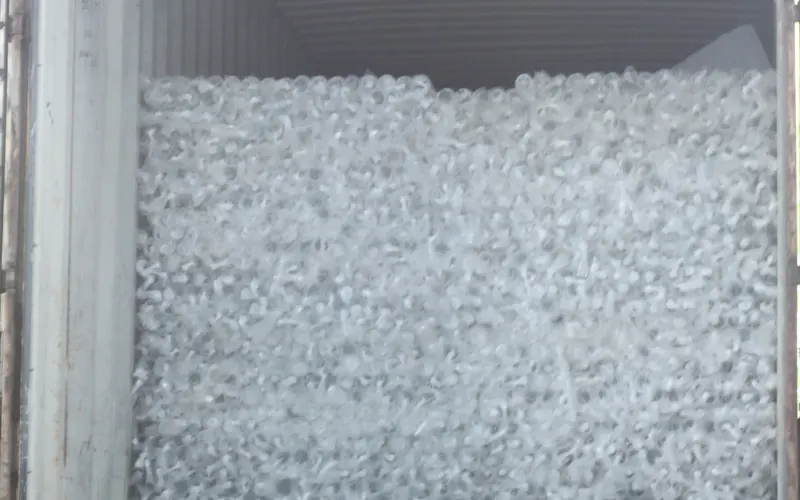
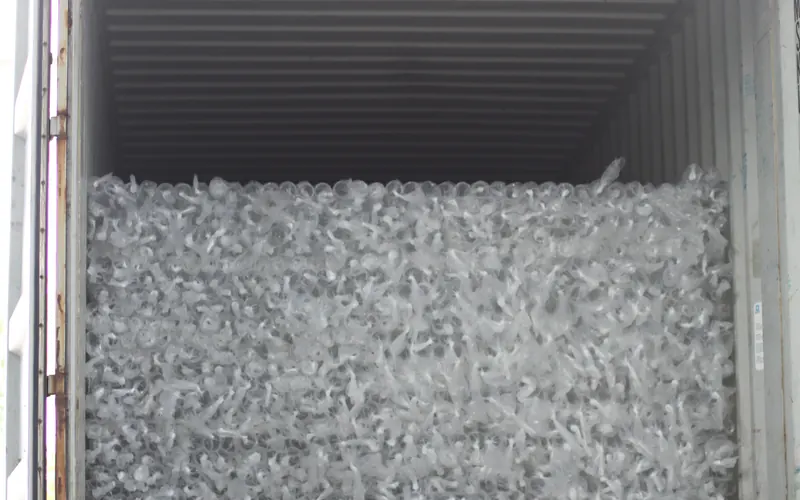
Extruded tube and profile arrive straight or they arrive useless. Packing is part of the product.
- Standard export packing
- Long-length protection against bending and scuffing
- OEM and private-label packaging
- Retail carton packagingthrough a partner
| Trade terms | EXW; FOB Shanghai on request |
|---|---|
| Port of loading | Shanghai |
| Maximum shipping length | 12 m |